Stroke, Its Types, and Physiotherapy Management
Overview:
A stroke occurs when the blood supply to a part of the brain is blocked or a blood vessel bursts, leading to loss of brain function. It can cause weakness, paralysis, speech difficulty, imbalance, sensory loss, and cognitive changes. Immediate medical attention followed by early physiotherapy is essential for recovery.
Types of Stroke
- Ischemic Stroke:
Caused by blockage of a blood vessel supplying the brain.
Most common type (around 80%).
Blockage occurs due to clot formation, plaque buildup, or narrowed arteries. - Hemorrhagic Stroke:
Occurs when a blood vessel in the brain ruptures and bleeds.
Caused by high BP, aneurysm, trauma.
Leads to rapid pressure build-up inside the skull. - TIA (Transient Ischemic Attack):
Also known as a “mini-stroke.”
Temporary interruption in blood supply.
Symptoms last a few minutes to hours.
Warning sign for a major stroke.
Common Symptoms of Stroke:
Sudden weakness/paralysis on one side
Difficulty speaking or understanding speech
Facial drooping
Loss of balance or coordination
Sudden severe headache
Vision problems
Difficulty walking
Physiotherapy Management
- Early Rehabilitation:
Begins as soon as the patient is medically stable.
Positioning to prevent stiffness
Passive movements to maintain joint mobility
Bed mobility training - Range of Motion (ROM) Exercises:
Passive, active-assisted, and active ROM for shoulder, elbow, wrist, hip, and knee
Helps prevent contractures and improve mobility - Strength Training:
Strengthening weak muscles of upper and lower limbs
Progressive resistance exercises
Focus on functional muscle groups - Balance & Coordination Training:
Sitting balance training
Standing balance training
Weight shifting and trunk control exercises - Gait Training:
Parallel bars, walker, or cane usage
Step training, weight-bearing exercises
Improving stride, foot placement, and endurance - Neurofacilitation Techniques:
NDT (Bobath), PNF, proprioceptive training
Helps restore normal movement patterns - Hand Function Rehabilitation:
Grip strengthening
Fine motor activities
Wrist and finger mobility exercises
Task-oriented training (reaching, grasping, releasing) - Spasticity Management:
Stretching tight muscles
Positioning
Splints for wrist, ankle, and fingers
Gentle joint mobilization - Functional Re-training:
Sitting-to-standing
Bed to chair transfers
Dressing, grooming, feeding training - Respiratory Physiotherapy:
Breathing exercises
Chest expansion training
Improving lung capacity and endurance - Home Exercise Program:
Daily practice is essential to promote neuroplasticity and faster recovery.
Outcome
Physiotherapy improves mobility, hand function, speech coordination, balance, walking ability, and overall independence. Early and consistent therapy leads to better long-term recovery and quality of life.
Parkinson’s Disease and Physiotherapy Management
Overview:
Parkinson’s Disease (PD) is a progressive neurological disorder caused by decreased dopamine production in the brain. It affects movement, balance, coordination, speech, and daily activities. Symptoms gradually worsen over time, but physiotherapy significantly helps maintain independence and mobility.
Common Symptoms:
Tremors (shaking of hands/legs)
Slowness of movement (bradykinesia)
Muscle stiffness/rigidity
Postural instability & poor balance
Shuffling gait
Difficulty initiating movement
Reduced facial expressions
Fatigue and decreased endurance
Physiotherapy Management
- Gait Training:
Improve stride length, heel strike, and arm swing
Cueing techniques (auditory/visual cues) to reduce freezing episodes
Treadmill training for better rhythm and balance - Balance & Posture Training:
Core strengthening
Static and dynamic balance exercises
Posture correction to reduce forward stooping - Strengthening Exercises:
Upper and lower limb strengthening
Neck and trunk strengthening
Resistance band exercises - Flexibility & Stretching:
Stretching tight muscles (hamstrings, calf, chest)
Reduce rigidity and improve joint mobility - Breathing & Chest Expansion Exercises:
Improves lung capacity and reduces fatigue
Helps maintain good respiratory function - Coordination Training:
Hand-eye coordination exercises
Functional task practice (buttoning, reaching, holding objects) - Relaxation Techniques:
Reduce muscle stiffness
Improve body control and mental calmness - Functional Training:
Sit-to-stand practice
Bed mobility
Walking, stair training, daily activity retraining - Home Exercise Program:
Daily structured exercises to maintain flexibility, strength, and gait quality.
Outcome
Physiotherapy helps improve walking, balance, posture, strength, and functional independence. Regular therapy slows physical decline and enhances quality of life for Parkinson’s patient.
Cerebral Palsy and Physiotherapy Management
Overview:
Cerebral Palsy (CP) is a group of neurological disorders caused by damage to the developing brain, usually before birth or during early childhood. It affects movement, muscle tone, posture, coordination, and sometimes speech and cognitive abilities. The condition is lifelong, but early physiotherapy greatly improves mobility and independence.
Types of Cerebral Palsy
- Spastic CP:
Most common type.
Increased muscle tone, stiffness, tightness
Difficulty with voluntary movement - Dyskinetic (Athetoid) CP:
Involuntary, uncontrolled movements
Fluctuating muscle tone - Ataxic CP:
Poor balance and coordination
Tremors, shaky movements - Mixed CP:
Combination of two or more types.
Common Symptoms
Muscle stiffness or limpness
Difficulty walking or standing
Poor balance and coordination
Involuntary movements
Delayed motor milestones
Tight muscles, contractures
Difficulty performing daily tasks
Physiotherapy Management
- Range of Motion (ROM) Exercises:
Prevent joint stiffness
Maintain flexibility
Reduce risk of contractures - Strengthening Exercises:
Improve muscle strength in weak muscle groups
Enhance functional mobility - Stretching:
Reduce spasticity
Relax tight muscles (especially hamstrings, calf, adductors) - Balance & Coordination Training:
Improve trunk control
Enhance stability for standing and walking - Gait Training:
Parallel bars, walkers, gait trainers
Improve step length, weight-bearing, and foot placement - Neurodevelopmental Techniques (NDT/Bobath):
Facilitate normal movement patterns
Reduce abnormal tone - Functional Training:
Sit-to-stand
Transfers
Reaching, grasping, holding objects
Activities of daily living - Assistive Devices:
Orthotics (AFOs)
Standing frames
Walkers and mobility aids - Sensory-Motor Training:
Improve body awareness
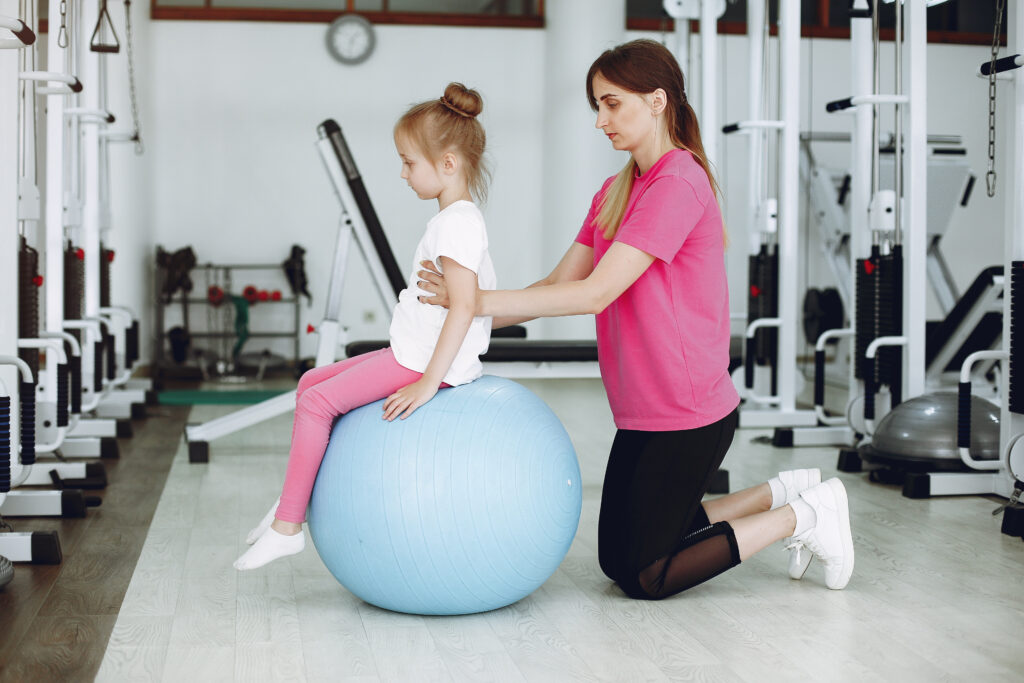
Enhance overall motor function - Play-Based Therapy (for children):
Improves engagement and learning
Enhances motor development through fun activities - Home Exercise Program:
Consistent daily practice improves long-term outcomes.
Outcome
Physiotherapy helps improve mobility, strength, balance, posture, and functional independence. Early and continuous rehab significantly enhances quality of life for children and adults with cerebral palsy.
Multiple Sclerosis (MS) and Physiotherapy Management
Overview:
Multiple Sclerosis (MS) is a chronic autoimmune neurological disorder where the body’s immune system attacks the myelin sheath of nerve fibers in the brain and spinal cord. This disrupts nerve signals, leading to weakness, fatigue, coordination problems, sensory changes, and mobility issues. Symptoms vary from mild to severe and may come in episodes (relapses).
Types of Multiple Sclerosis
- Relapsing-Remitting MS (RRMS):
Most common type.
Symptoms appear (relapse) and then partially or fully improve (remission). - Secondary Progressive MS (SPMS):
Gradual worsening of symptoms with fewer remissions. - Primary Progressive MS (PPMS):
Slow, steady worsening from the beginning without relapses. - Progressive-Relapsing MS (PRMS):
Continuous progression with occasional relapses.
Common Symptoms
Muscle weakness
Fatigue and low endurance
Balance and coordination problems
Numbness or tingling
Muscle stiffness/spasticity
Difficulty walking
Vision problems
Bladder or bowel issues
Cognitive or memory changes.
Physiotherapy Management
- Strengthening Exercises:
Improve muscle power in weak limbs
Focus on lower limb, trunk, and core stability. - Stretching & Spasticity Management:
Reduce muscle stiffness
Hamstring, calf, hip flexor, and back stretches. - Balance and Coordination Training:
Static and dynamic balance exercises
Trunk control, weight shifting, and functional reach tasks. - Gait Training:
Walker, cane, or assistive devices if needed
Step training, endurance walking, and posture correction
Treadmill training to improve speed and coordination. - Fatigue Management:
Energy conservation techniques
Pacing activities and avoiding over-exertion
Breathing exercises to improve endurance. - Functional Training:
Sit-to-stand
Bed mobility
Stair climbing
Transfer training. - Aerobic Exercises:
Low-intensity cycling, walking, or aquatic therapy
Improves cardiovascular fitness and reduces fatigue. - Balance Support Equipment:
Ankle-foot orthosis (AFO) for foot drop
Braces or supports for stability. - Cognitive & Sensory Training:
Tasks to improve focus, memory, and coordination
Sensory stimulation exercises. - Home Exercise Program :
Daily mild to moderate exercises to maintain mobility and reduce flare-ups.
Outcome
Physiotherapy helps improve walking, balance, strength, posture, flexibility, and daily functional independence. Regular therapy also slows the progression of disability, reduces fatigue, and enhances quality of life for individuals with MS.